

Evaluating the performance of executives is a critical task for boards and stakeholders. Effective leadership is essential for driving organizational success, and having the right metrics in place ensures that executives are held accountable and aligned with the company’s strategic goals. In this article, we explore the key metrics that should be considered when evaluating executive performance.
Financial Performance
One of the most straightforward metrics for evaluating executive performance is financial performance. This includes:
Revenue Growth:
Tracking year-over-year revenue growth provides insight into the executive’s ability to drive sales and expand the business.
Profit Margins:
Assessing profit margins helps determine how effectively the executive manages costs and maximizes profitability.
Return on Investment (ROI):
ROI measures the efficiency of investments made under the executive’s leadership, indicating their ability to generate returns for stakeholders.
Strategic Execution
Evaluating how well an executive executes the company’s strategic plan is crucial. Key metrics include:
Achievement of Strategic Goals:
Assessing the progress towards strategic goals and objectives set by the board.
Market Position:
Evaluating the company’s market share and competitive position under the executive’s leadership.
Innovation and Growth Initiatives:
Measuring the success of new product launches, market expansions, and other growth initiatives.
Operational Efficiency
Operational efficiency metrics provide insight into how well the executive manages the company’s operations. Important metrics include:
Operational Costs:
Monitoring the control and reduction of operational costs.
Process Improvements:
Evaluating the implementation and impact of process improvements and efficiencies.
Supply Chain Management:
Assessing the effectiveness of supply chain management and logistics.
Leadership and Team Development
An executive’s ability to lead and develop their team is a key indicator of their performance. Metrics to consider include:
Employee Engagement:
Measuring employee satisfaction and engagement levels through surveys and feedback.
Talent Retention:
Tracking retention rates of key talent and leadership development within the organization.
Succession Planning:
Evaluating the effectiveness of succession planning and the development of future leaders.
Customer Satisfaction
Customer satisfaction is a direct reflection of the executive’s impact on the company’s products and services. Key metrics include:
Net Promoter Score (NPS):
Measuring customer loyalty and likelihood to recommend the company’s products or services.
Customer Retention Rate:
Tracking the rate at which customers continue to do business with the company.
Customer Feedback:
Analyzing customer feedback and reviews to gauge satisfaction and areas for improvement.
Corporate Governance and Ethics
An executive’s commitment to corporate governance and ethical practices is essential for long-term success. Metrics to consider include:
Compliance and Risk Management:
Evaluating adherence to regulatory requirements and effective risk management practices.
Ethical Leadership:
Assessing the executive’s commitment to ethical behavior and corporate social responsibility.
Board Relations:
Measuring the quality of the executive’s interactions and communications with the board.
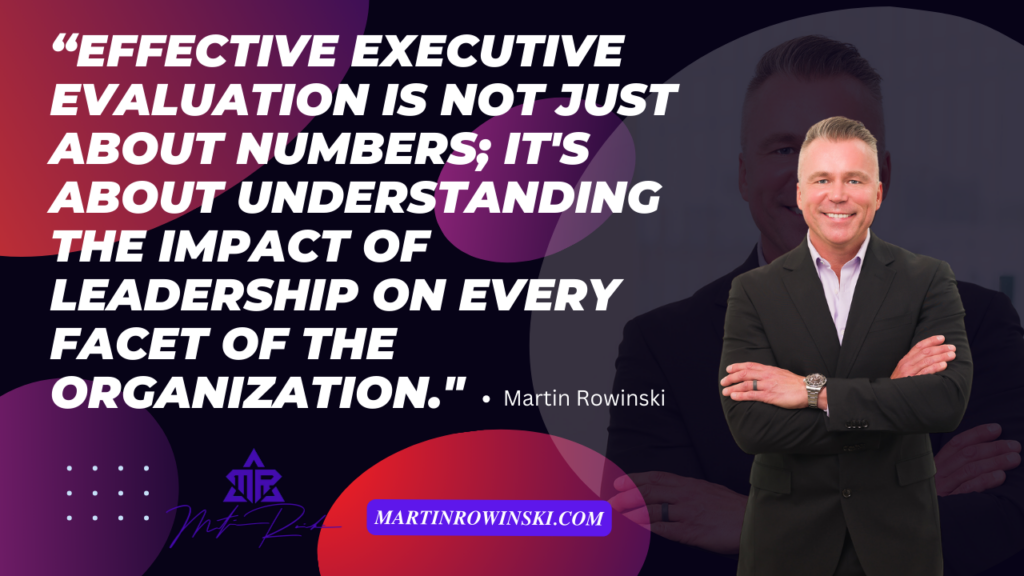
“Effective executive evaluation is not just about numbers; it’s about understanding the impact of leadership on every facet of the organization.”
– Martin Rowinski
Evaluating executive performance requires a comprehensive approach that considers financial performance, strategic execution, operational efficiency, leadership and team development, customer satisfaction, and corporate governance. By focusing on these key metrics, boards and stakeholders can ensure that executives are driving organizational success and aligning with the company’s strategic goals.





